Movement as Medicine: How Indian Classical Dance Is Entering the Western Therapeutic Landscape
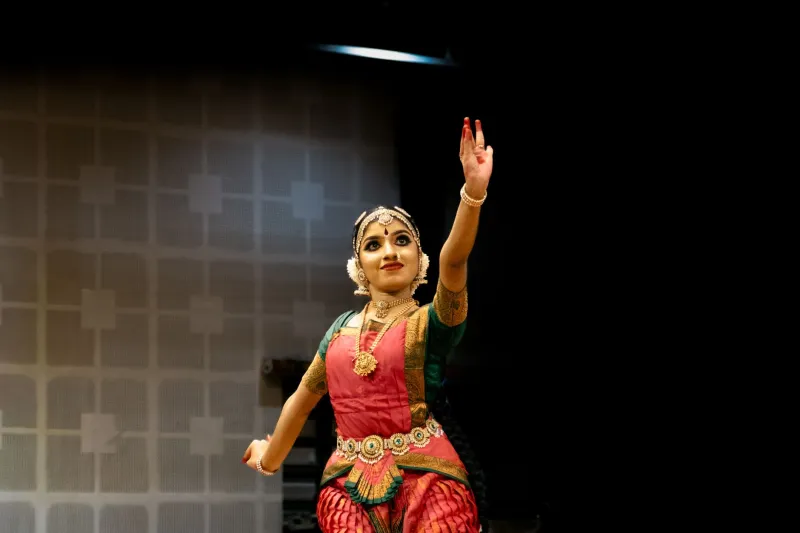
In a therapy office in Portland, Oregon, a licensed clinical social worker asks her client to extend one hand, curve the fingers gently inward, and hold the gesture while breathing slowly. The posture is the Pataka mudra — one of the foundational hand gestures of Indian classical dance — and the therapist is using it not to teach choreography, but to help her client regulate a nervous system destabilized by years of complex trauma. What is unfolding in that room is part of a broader, still-emerging conversation between two worlds that have rarely spoken directly to one another: the ancient performing arts traditions of the Indian subcontinent and the contemporary science of somatic psychology.
The convergence is neither accidental nor superficial. It is the product of decades of cross-cultural dialogue, the expanding influence of body-centered therapeutic modalities in the United States, and a growing recognition among both Western clinicians and Indian dance scholars that the philosophical foundations of classical Indian performance hold genuine relevance for the healing of embodied suffering.
The Somatic Turn in Western Mental Health
To understand why Indian classical dance is finding a home in therapeutic contexts, it helps to understand the trajectory of Western psychology over the past three decades. The publication of Bessel van der Kolk's landmark work on trauma and the body in the mid-2010s accelerated a shift that had been building for years: a movement away from purely cognitive or talk-based interventions toward approaches that engage the body as a primary site of healing. Practices such as Somatic Experiencing, Sensorimotor Psychotherapy, and EMDR all operate on the premise that trauma is stored not merely in memory or cognition, but in the body's tissues, postures, and movement patterns.
This somatic turn created an opening. If the body is where trauma lives, then disciplines that have spent millennia theorizing and refining the body's expressive and regulatory capacities become newly relevant. Indian classical dance, with its extraordinarily detailed codification of gesture, posture, breath, and emotional state, represents one of the world's most sophisticated systems for understanding the relationship between physical form and inner experience.
What the Tradition Offers
The Natyashastra, the foundational Sanskrit treatise on performing arts attributed to the sage Bharata Muni and dating back roughly two millennia, describes in painstaking detail the correspondence between physical gestures and emotional states. The text's theory of rasa — the aesthetic emotional essences that performance is designed to evoke and transmit — presupposes a deeply integrated relationship between the body in motion and the emotional life of both performer and witness.
For Ananya Krishnaswamy, a Bharatanatyam teacher and scholar based in the San Francisco Bay Area who has spent the past several years consulting with Western somatic practitioners, this is precisely the point. "The tradition does not separate the body from the mind or the spirit," she explains. "When a student learns to embody Karuna — compassion, grief — through specific postures and gestures over many years of practice, something happens that is not merely performative. The body learns a new relationship to that emotional state. That is not so different from what somatic therapists are trying to achieve."
Mudras, the codified hand gestures that form one of the most recognizable elements of Indian classical dance, have attracted particular interest from Western practitioners. The hands are richly innervated and deeply connected to the nervous system; numerous therapeutic modalities, from certain forms of cognitive behavioral therapy to yoga-based interventions, already make use of hand positions to influence physiological and psychological states. The extensive mudra vocabulary of traditions such as Bharatanatyam, Odissi, and Kathakali offers a far more elaborate and systematically theorized repertoire than most Western therapeutic frameworks have previously engaged.
Practitioners Navigating New Ground
Dr. Melissa Hargrove, a psychologist in Minneapolis who specializes in PTSD and anxiety disorders, began incorporating elements of Indian classical movement vocabulary into her practice after completing a two-year mentorship with a local Odissi teacher. She is careful about the language she uses. "I am not teaching dance," she says. "I am not representing myself as an authority on this tradition, and I am not extracting gestures from their context and claiming they work the same way in isolation. What I am doing is drawing on principles — the idea that precise, intentional physical form can create specific internal states — and I am doing that in close dialogue with teachers who hold the tradition."
That dialogue, practitioners on both sides agree, is not optional. It is the ethical spine of the entire enterprise. The history of Western appropriation of non-Western cultural and spiritual practices is long and often damaging, and the performing arts traditions of India have not been exempt from that history. Krishnaswamy is direct on this point. "There is a difference between inspiration and extraction," she says. "If a therapist learns enough about this tradition to understand why it works — the philosophy, the years of embodied training it represents, the cultural and spiritual context — and then works respectfully within those constraints, that is a conversation. If someone simply takes a gesture, strips it of everything that gives it meaning, and sells it as a wellness product, that is something else entirely."
Research, Evidence, and the Road Ahead
The evidence base for dance and movement therapies in general is expanding, though research specifically focused on Indian classical dance modalities in clinical contexts remains limited. Several studies conducted in India have examined the effects of Bharatanatyam practice on stress markers, emotional regulation, and quality of life in various populations, including adolescents and older adults. American researchers are beginning to take notice, though rigorous clinical trials integrating Indian classical movement vocabulary into standardized therapeutic protocols are still largely absent from the literature.
This gap matters. For the integration to be taken seriously within mainstream American mental health practice, it will need to meet the evidentiary standards that govern clinical decision-making. Some practitioners argue that the tradition's complexity — the fact that its effects are inseparable from years of disciplined embodied training — makes it resistant to the kind of reduction required by randomized controlled trials. Others contend that this is precisely the challenge that makes the research worth pursuing.
A Conversation Still Being Written
What is perhaps most striking about this emerging intersection is its tentativeness — the degree to which its most thoughtful participants resist the impulse to declare easy victories or draw premature conclusions. The traditions of Indian classical performance were not designed as therapeutic tools. They were designed as vehicles for aesthetic experience, devotional practice, and the transmission of cultural knowledge across generations. To bring them into a clinical context is to place them in a conversation they were never intended to join, and that requires a particular kind of humility from everyone involved.
And yet the conversation is happening, in therapy offices and university research centers and community dance studios across the United States. The body, as the tradition has always insisted, knows things that words cannot fully capture. Whether Western therapeutic practice can engage that knowledge respectfully, rigorously, and in genuine partnership with the communities who have carried it forward — that remains the central question of a dialogue still very much in progress.


