Sacred Labor, Erased Histories: The Devadasi Legacy and the Fight to Reclaim Indian Dance's Spiritual Roots
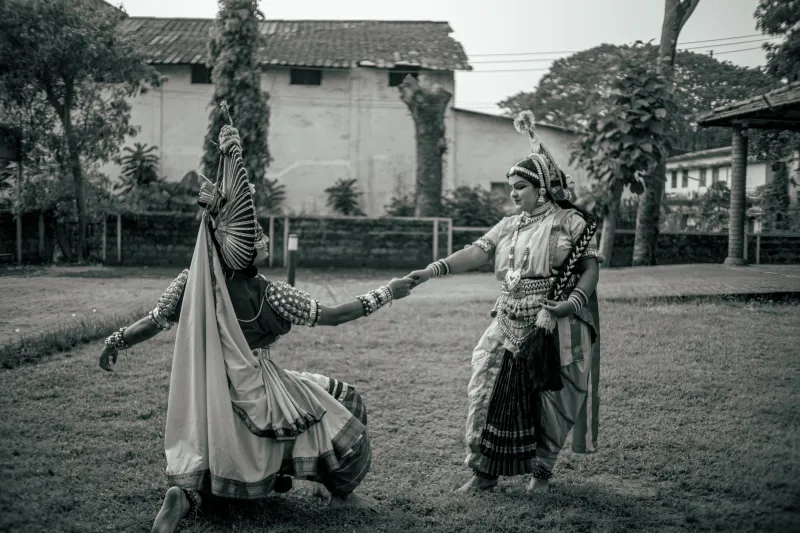
When American audiences attend a Bharatanatyam recital — whether at a university performing arts center in Chicago or a cultural festival in the San Francisco Bay Area — they are, in most cases, watching a tradition that was nearly extinguished less than a century ago. The form that survives, celebrated and codified, carries within it a wound that is rarely named from the stage. To understand that wound, one must begin with the devadasis: the women who were the original bearers of this knowledge, and whose systematic erasure represents one of the more consequential acts of cultural violence in modern South Asian history.
Who Were the Devadasis?
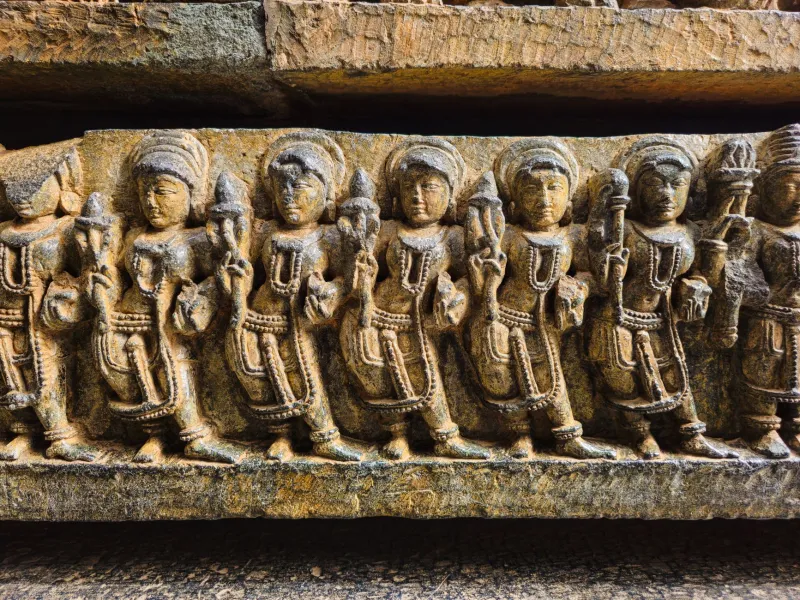
The word itself translates, with deceptive simplicity, as "servant of god." Devadasis were women formally dedicated to the service of Hindu temples, a practice documented across the Indian subcontinent for well over a thousand years. Their responsibilities were liturgical and artistic in equal measure. They performed ritual dances before the deity, participated in temple ceremonies, and served as custodians of highly sophisticated movement vocabularies, musical knowledge, and poetic traditions that were transmitted across generations within hereditary lineages.
Their social position was complex and, by most pre-colonial accounts, respected. Devadasis occupied a recognized ritual function within temple economies. They were not wives in the conventional sense — their dedication was to the divine — and this afforded them a degree of property ownership, social mobility, and artistic autonomy that was largely unavailable to married women of equivalent caste standing. The Natya Shastra itself, the ancient Sanskrit treatise from which this publication draws its name, situates the dancer within a framework of spiritual and aesthetic purpose that presupposes exactly this kind of dedicated, lifelong practitioner.
The Colonial Reframing
British colonial administrators and Christian missionaries arrived with a different interpretive framework entirely. The ritual dedication of women to temples, combined with the devadasi's legal distance from conventional marriage, was read through a Victorian moral lens as institutionalized prostitution. This reframing was not merely descriptive — it was politically consequential. By the early twentieth century, reform movements both within India and driven by colonial pressure had coalesced around the Anti-Nautch campaign, a sustained effort to abolish the devadasi system entirely.
The campaign succeeded. The Madras Devadasi (Prevention of Dedication) Act was passed in 1947, effectively criminalizing the very practice that had sustained classical South Indian dance for centuries. The women who had been its primary practitioners were repositioned in the public imagination as victims requiring rescue rather than artists deserving recognition. Their knowledge, their lineages, and their contributions were either absorbed without attribution into the newly sanitized tradition or simply lost.
What replaced the devadasi tradition was not a neutral preservation effort. The reconstruction of Bharatanatyam — the form most directly descended from devadasi practice — was led primarily by upper-caste reformers, most notably Rukmini Devi Arundale, whose 1935 performance is widely credited with inaugurating the "revival." Arundale's reconstruction was deliberate and, in many respects, artistically significant. It was also a translation into a new social register: the devadasi's embodied, temple-bound practice was reframed as a respectable concert art suitable for middle-class women and national cultural performance.
What Was Lost in Translation
The cost of this translation is still being measured. Scholars such as Davesh Soneji, whose research into devadasi communities in Andhra Pradesh and Tamil Nadu has become foundational to the field, have documented the degree to which the reformers' version of the tradition diverged from what it replaced. Repertoire was altered or discarded. The erotic devotional poetry — particularly the padam and javali genres, which formed a substantial portion of the devadasi performance canon — was either suppressed or reinterpreted to minimize its sensual dimensions. The intimate, improvisatory relationship between the dancer and the deity was replaced by a more formal concert structure oriented toward a human audience.
Perhaps most significantly, the women who had actually preserved the form through its most precarious period were largely excluded from the revival on social grounds. Some, like the legendary Balasaraswati, navigated this exclusion through sheer artistic authority. Many others did not. Their knowledge went with them.
The Work of Reclamation
In American universities and research institutions, this history has become a site of serious scholarly engagement. Ethnomusicologists, dance historians, and postcolonial theorists have spent the past three decades excavating what the reformist narrative buried. Their work draws on temple inscriptions, court records, oral histories gathered from surviving hereditary communities, and the performance practices of devadasi descendants who maintained their traditions outside the concert mainstream.
The implications for contemporary practice are significant. Dancers trained in the post-revival tradition are increasingly grappling with questions about what their repertoire includes, what it excludes, and whose labor and knowledge it encodes. Several prominent performers — including artists based in the United States who trained in both India and American conservatory settings — have begun incorporating suppressed repertoire into their work, often with extensive program notes that contextualize the historical circumstances of its disappearance.
This is not a simple act of restoration. The devadasi tradition was not a monolith, and its practitioners did not exist outside the caste hierarchies and social constraints of their time. Reclamation efforts must navigate these complexities honestly, resisting both the impulse to idealize a pre-colonial past and the equally distorting impulse to treat the entire tradition as irrecoverably compromised.
Why This History Matters to American Audiences
For audiences in the United States encountering Indian classical dance for the first time, the devadasi history offers a crucial reorientation. It explains why the form carries the spiritual weight it does — the dancer's relationship to the divine is not metaphorical decoration but the structural foundation of the entire tradition. It also illuminates why questions of authenticity, ownership, and representation are so charged within Indian dance communities, including those that have taken root across American cities.
More broadly, the devadasi story is a case study in how colonial power operates through cultural categories — how the act of renaming can be as destructive as the act of prohibition, and how the work of recovery requires not just archival research but a willingness to sit with historical discomfort. American audiences are, in their own national context, increasingly familiar with this kind of reckoning. The devadasi history invites a parallel engagement: an acknowledgment that the art form one is watching is not simply beautiful, but is beautiful in part because of what it survived.
The Ongoing Conversation
The devadasi controversy is not a settled question. It continues to generate debate within performance communities, academic conferences, and the increasingly active digital spaces where Indian classical artists engage with their global audiences. Choreographers are staging new works that directly address the suppressed history. Scholars are publishing monographs and documentary films. Hereditary practitioners are, in some cases, being invited back into conversations from which they were long excluded.
None of this undoes what was lost. But the conversation itself — rigorous, contested, and necessary — is a form of honoring. Understanding it is, for any serious student or audience member of Indian classical dance, not optional. It is the ground on which the tradition stands.