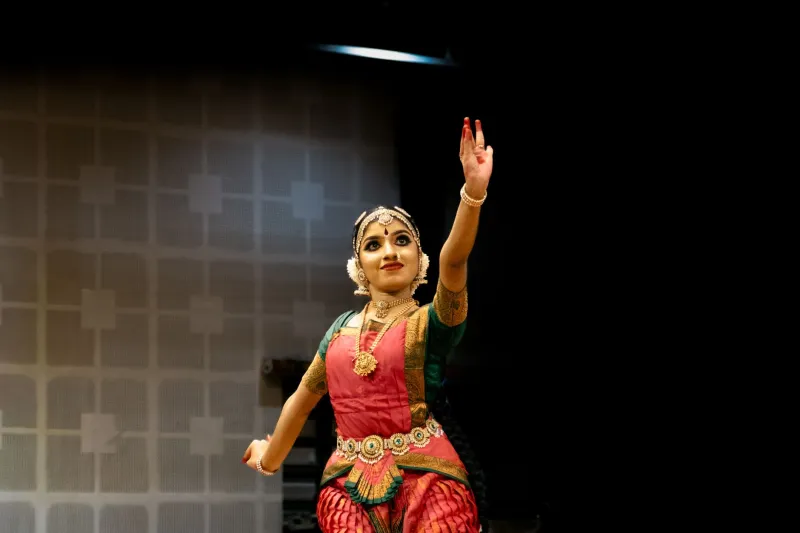
When the Stage Becomes a Battlefield: Indian Classical Dance as an Instrument of Dissent
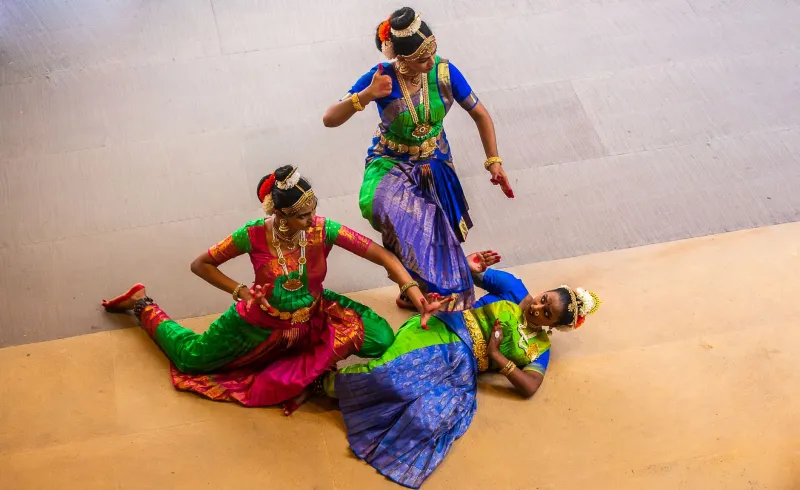
For many American audiences encountering Indian classical dance for the first time, the experience is one of overwhelming beauty—intricate hand gestures, cascading footwork, the architectural precision of a body trained over decades. What is less immediately visible is the long and complicated history of the dancer as agitator, the performance hall as courtroom, and the classical vocabulary itself as a language of defiance. To understand Indian classical dance fully is to understand that it has never been merely decorative.
The Colonial Stage and the Reclamation of Form
The political life of Indian classical dance begins, in many respects, with the very effort to preserve it. By the late nineteenth century, British colonial administration had systematically marginalized the devadasi tradition—the temple-based performance lineage from which forms like Bharatanatyam descended—through legislation that effectively criminalized the communities of women who sustained it. What followed was not simply cultural loss but a calculated erasure designed to render Indian performing arts either primitive or morally suspect in the eyes of colonial governance.
The nationalist response was both cultural and confrontational. Figures such as Rukmini Devi Arundale, who reconstituted and staged Bharatanatyam for urban, reform-minded audiences in the 1930s, were engaged in an act that carried unmistakable political weight. To place an Indian classical body on a proscenium stage, to insist on its sophistication and its legitimacy, was to argue—without a single spoken word—against the colonial narrative of Indian cultural inferiority. Dance became a form of counter-testimony.
At the same time, the independence movement found in classical performance a ready-made symbolic vocabulary. Uday Shankar, whose fusion of Indian movement traditions with Western theatrical staging drew international attention, performed in Europe and the United States during a period when the cause of Indian self-determination was actively seeking allies abroad. The body in motion was also the body making an argument.
Choreographing Caste: Dissent From Within the Tradition
If the anti-colonial moment deployed Indian classical dance against an external power, subsequent generations of practitioners turned the form inward, using it to interrogate the hierarchies that had structured the tradition itself. Caste has been among the most contested of these fault lines.
Contemporary Bharatanatyam choreographers—many of them from Dalit and lower-caste communities who were historically excluded from the very tradition they now practice—have produced works that place caste discrimination at the center of the performance frame. The choreographer and dancer Lata Pada, whose work has been presented on stages across North America, has spoken at length about the necessity of bringing difficult social truths into the concert hall. Others, working within India's thriving contemporary dance ecology, have created pieces that reinterpret canonical narratives—the stories of gods and kings that form the classical repertoire—from the perspective of those the tradition once rendered invisible.
This is not, it should be noted, a simple matter of adding political content to a neutral form. The classical vocabularies themselves carry ideological freight. The hierarchies encoded in character types, the gendering of certain movements, the social assumptions embedded in the abhinaya tradition of expressive acting—all of these have become sites of choreographic renegotiation. When a dancer chooses to embody a character the tradition would have denied her, or to perform a gesture associated with devotion in a context that makes it ironic, the political act is inseparable from the aesthetic one.
Gender, the Body, and the Right to Perform
The question of who is permitted to occupy the classical stage—and under what conditions—has generated some of the most charged artistic interventions in recent decades. Male dancers performing in traditionally female roles, transgender artists claiming classical forms as their own expressive inheritance, and women choreographers reframing narratives that have historically positioned the female body as object rather than subject: all of these represent forms of resistance conducted through the grammar of the tradition itself.
The work of artists such as Kalakshetra-trained performers who have publicly challenged the institution's conservative gender policies, or of artists like Navtej Singh Johar—whose legal battle against Section 377, India's colonial-era anti-sodomy law, was ultimately victorious at the Supreme Court level—demonstrates that the classical dancer's political life does not end at the wings of the stage. For American audiences familiar with the way that figures in other performing arts traditions, from ballet to opera, have navigated the intersection of artistic identity and civil rights, these histories offer a recognizable but distinctly inflected parallel.
Contemporary Stages, Urgent Messages
The political valence of Indian classical dance did not diminish as the forms gained institutional recognition and international prestige. If anything, the tension between the tradition's elevated cultural status and the urgent social conditions outside the concert hall has made the political gesture more pointed.
Works addressing communal violence—the periodic eruptions of religious and ethnic conflict that have marked post-independence Indian history—have appeared on stages in cities from Chennai to Chicago. Choreographers have used the classical form's capacity for narrative and emotional complexity to represent events that resist straightforward representation: the 1984 anti-Sikh pogroms, the 2002 Gujarat riots, the ongoing violence against religious minorities. To render these histories through the body, using a form whose roots lie in devotional practice, is to ask a question the performance itself cannot fully answer: what does it mean to seek the sacred in a world that destroys it?
In the United States, where South Asian diaspora communities have established robust networks of classical dance schools, performance venues, and cultural organizations, these questions take on additional dimensions. Diaspora artists navigating the expectations of both their heritage communities and their American audiences have produced work that is simultaneously a negotiation of cultural identity and a commentary on the political conditions—in South Asia and in the United States—that shape that identity. The political act, in this context, is also an act of self-definition.
What the Form Demands of Its Audience
For American audiences approaching these works, the experience requires a particular kind of attention. The political content of a classical Indian dance performance is rarely explicit in the manner of a protest song or a polemical play. It operates, instead, through the accumulation of aesthetic choices: the selection of a text, the casting of a body, the reframing of a familiar gesture, the silence that follows a particular moment of intensity.
This indirection is not evasion. It is, in many respects, a form of sophistication—an insistence that political meaning can be carried in the quality of a movement, not only in its content. The Natyashastra, the foundational treatise from which this publication takes its name, understood performance as a complete system of human communication, capable of conveying the full range of thought and feeling. That this system has been turned, repeatedly and inventively, toward the work of resistance should surprise no one who has studied its capacities seriously.
The classical dancer who steps onto a stage to perform a work about caste violence, or colonial memory, or gender inequality, carries with her not only the technical training of years but the accumulated weight of a tradition that has always known how to speak when speech itself was dangerous. That knowledge, transmitted through the body and refined across generations, remains one of the most powerful instruments in the performing arts.