Feeling Everything, Understanding Nothing: The Emotional Power of Indian Classical Dance on Western Audiences
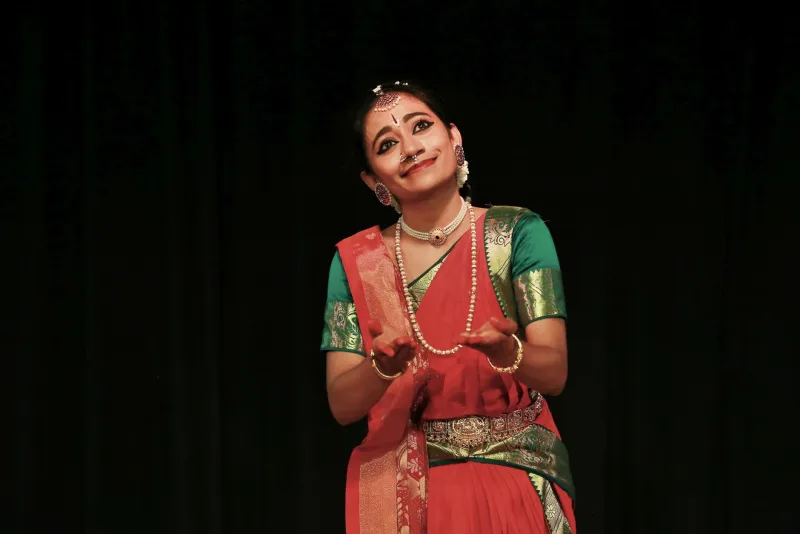
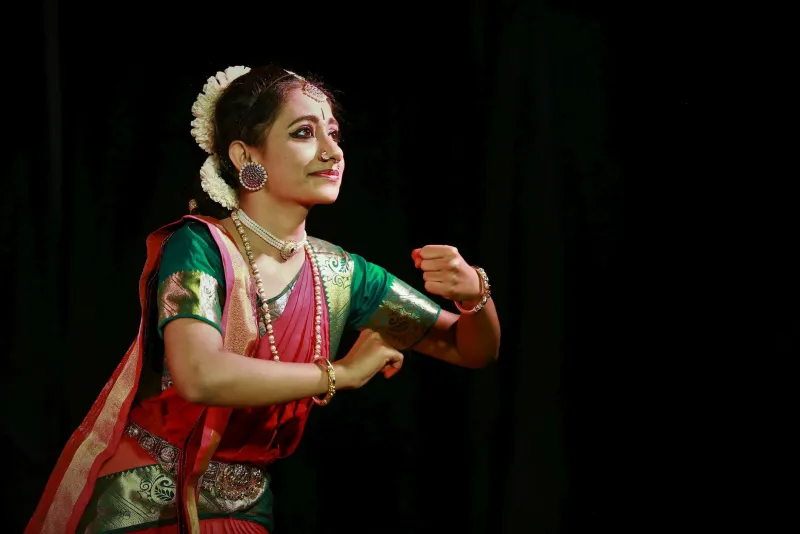
Sarah Connelly, a high school art teacher from Portland, Oregon, attended her first Bharatanatyam performance at a local university cultural festival three years ago. She had no prior exposure to Indian classical dance, no knowledge of Sanskrit narrative traditions, and no familiarity with the symbolic grammar of mudras. She left the auditorium, by her own admission, weeping — and unable to explain why.
"I kept telling my husband I had no idea what I had just watched," she recalled. "But I felt like I had understood something enormous. It made no sense."
Connelly's experience is neither unusual nor anecdotal. Across the United States, as Indian classical dance forms such as Bharatanatyam, Odissi, and Kathak gain wider visibility through university performance series, cultural festivals, and streaming platforms, Western audiences with no cultural or linguistic context for these traditions are reporting responses that range from quiet awe to open emotional catharsis. The phenomenon raises a question that sits at the intersection of neuroscience, cultural psychology, and one of India's most sophisticated aesthetic theories: can rasa — the refined emotional essence that classical Indian performance theory holds to be the highest aim of any performing art — travel across the boundaries of cultural knowledge?
What Rasa Actually Claims to Do
To understand the paradox, it helps to understand what the theory of rasa actually proposes. Codified by the sage Bharata Muni in the Natyashastra, the foundational text of Indian performing arts, rasa theory holds that great performance does not merely depict emotion but cultivates it within the audience. The performer works through precisely calibrated combinations of movement, facial expression, rhythm, and narrative context to awaken latent emotional states — called bhavas — in the spectator. The result, when successful, is rasa: a state of aesthetic relish that is neither raw personal emotion nor detached intellectual appreciation, but something elevated and impersonal between the two.
Critically, classical rasa theory was formulated with a specific audience in mind — what Bharata called the sahridaya, or "one with a prepared heart." This was a cultivated spectator who arrived at the performance already literate in its symbolic conventions. The question of whether rasa could function for an unprepared, culturally uninitiated audience was never meaningfully posed in the original framework, because the scenario was not conceived as a practical possibility.
The contemporary American concert hall has made it one.
What the Neuroscience Suggests
Researchers studying the neuroscience of aesthetic experience have begun to offer partial explanations for what audiences like Connelly describe. Work emerging from the field of embodied cognition suggests that human beings are wired to respond to intentional, expressive movement at a neurological level that precedes conscious interpretation. Mirror neuron systems — the neural networks that activate when we observe another person performing an action — appear to generate internal simulations of movement in the observer's body, producing affective states that do not require conceptual understanding to feel real.
Dr. Ananya Krishnamurthy, a cognitive neuroscientist at a research university in the San Francisco Bay Area who studies cross-cultural aesthetic response, frames the phenomenon carefully. "There is strong evidence that certain qualities of movement — sustained attention, precise control, the coordination of breath and gesture — signal emotional intentionality to observers across cultural contexts," she notes. "When you watch a trained Bharatanatyam dancer, the sheer precision and presence communicate that something meaningful is happening, even before you can name what it is. The nervous system responds to that signal."
But Krishnamurthy is quick to distinguish this from a claim that rasa travels intact across cultural divides. "Responding to intentional movement is not the same as receiving the specific aesthetic content that the performer is transmitting," she says. "The audience may be genuinely moved, but moved by what, exactly, is a different and much harder question."
The Projection Problem
This is where the paradox sharpens into something more philosophically uncomfortable. If Western audiences are experiencing genuine emotional responses to performances whose symbolic content they cannot access, there are at least two very different explanations available — and they carry significantly different implications.
The first is optimistic: rasa, or something functionally equivalent to it, operates through channels of human emotional perception that are deeper and more universal than cultural coding. The second is more cautionary: audiences are not receiving the performance at all in any meaningful sense, but are instead projecting their own emotional narratives onto an aesthetic surface they find beautiful and foreign. They are, in effect, watching themselves.
Priya Nair, a senior Bharatanatyam performer and teacher based in the Chicago area who has performed extensively for mixed American audiences, has spent years navigating this ambiguity. "I notice that Western audiences often respond most strongly to the moments of stillness, or to the more obviously expressive facial work," she observes. "These are elements that translate across cultural experience more readily. But the intricate abhinaya — the narrative gesture sequences, the specific mythological references — those are landing differently, or perhaps not landing in the way I intend at all."
Nair does not frame this as a failure. "Something real is being communicated," she says. "But I am honest with myself that it may not always be what I am trying to say. The audience and I may be having two different conversations simultaneously, and both of those conversations have value."
What First-Time Spectators Actually Report
Interviews with American first-time attendees at Indian classical dance performances reveal a consistent pattern of response that itself tells a story. Spectators frequently describe a sense of encountering a language they cannot speak but somehow feel they almost understand. They report being drawn forward in their seats during sustained abhinaya sequences, experiencing a slowing of their own breath during meditative Odissi passages, and feeling an inexplicable sense of narrative coherence even when they could not articulate what story they believed they had witnessed.
These descriptions align closely with what cognitive scientists call "aesthetic chills" — the involuntary physiological responses associated with profound aesthetic experience — and with the broader phenomenon of musical and artistic engagement across unfamiliar traditions. They do not, however, confirm that rasa, as Bharata conceived it, is what these audiences are experiencing.
What they do confirm is that something is happening — something that exceeds mere visual novelty or polite cultural appreciation. Whether that something is a universal emotional technology, a sophisticated form of projection, or a third thing that neither classical Indian aesthetic theory nor contemporary neuroscience has yet adequately named remains genuinely open.
A Living Question for a Living Archive
For practitioners and scholars of Indian classical dance, the phenomenon of the emotionally moved but culturally uninitiated Western audience is not merely an interesting data point. It is a provocation that cuts to the heart of what these art forms are, what they are for, and what it means to carry them into new cultural contexts.
If rasa can operate without the sahridaya — without the prepared heart — then these traditions contain a power that their own foundational texts did not fully account for. If it cannot, then the profound responses of audiences like Connelly are real experiences that nevertheless exist at a remove from the art's actual intention, and that gap carries ethical and artistic weight.
The most honest answer, for now, may be the one that Bharatanatyam dancer and scholar Meenakshi Subramaniam offered at a symposium on cross-cultural performance in New York last fall: "Rasa was never meant to be a fixed transmission. It was always a meeting. The question is whether two people can meet across a distance this wide — and what each of them takes home from that encounter."
Sarah Connelly, back in Portland, is still thinking about what she took home. She has since attended two more performances, read an introductory guide to abhinaya, and signed up for a lecture series on classical Indian aesthetics. The weeping, she says, has not stopped. But it has, she thinks, changed character.
"Now I feel like I'm crying about something more specific," she said. "I'm not sure that's better. But it feels more like a real conversation."