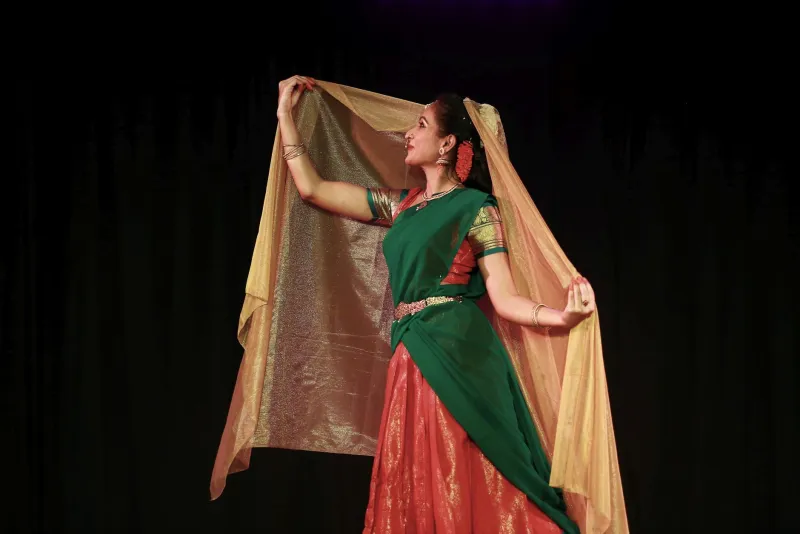
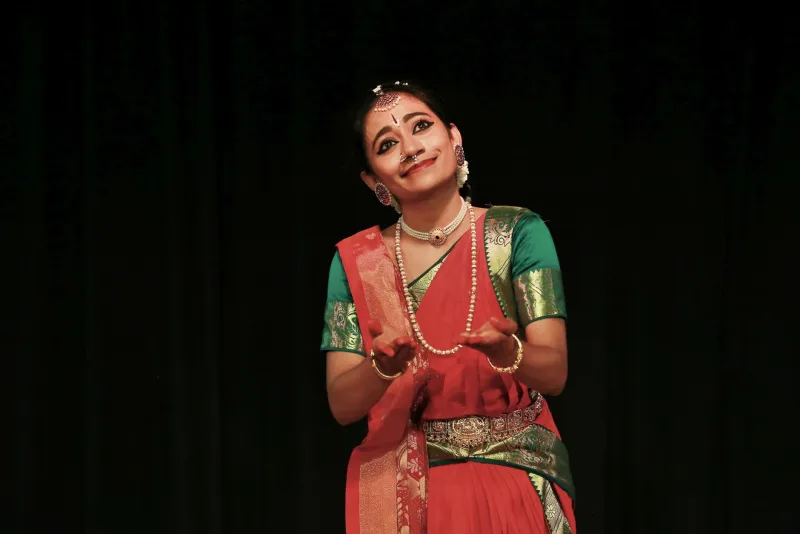
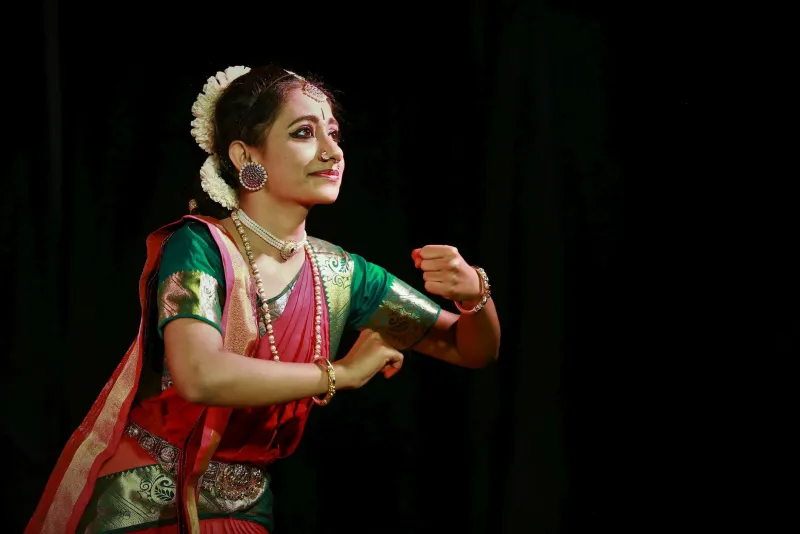
Lost in Translation: How Western Dance Students Misread the Spiritual Architecture of Indian Classical Forms
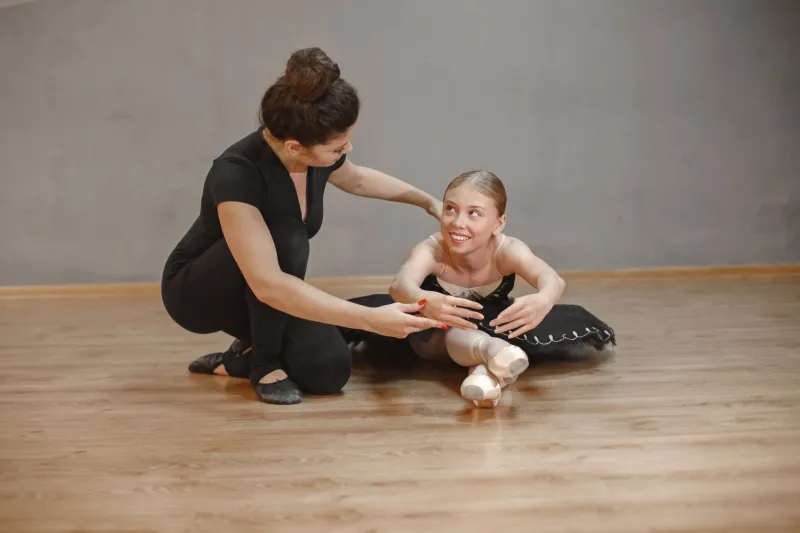
There is a particular kind of enthusiasm that arrives in the studio before understanding does. A student who has watched a Bharatanatyam performance on YouTube, or caught a glimpse of Odissi at a cultural festival in Chicago or Houston, may walk into a first class carrying genuine wonder — and a set of assumptions so deeply embedded that they are nearly invisible. The wonder is valuable. The assumptions can quietly dismantle everything.
Indian classical dance is not a collection of beautiful shapes. It is, in the language of the Natyashastra itself, a complete cosmological system — one in which the body, sound, emotion, narrative, and the sacred are not merely connected but inseparable. When that system is encountered through an aesthetic lens alone, something essential is lost. The forms remain; the meaning evacuates.
The Mudra Problem
Perhaps no single element of Indian classical dance is more consistently misread by Western students than the mudra. Hand gestures, in the popular imagination, function as decoration — an exotic visual flourish that distinguishes these traditions from ballet or contemporary forms. Students learn to position their fingers with care, and the shapes they produce can be genuinely beautiful. But beauty, here, is almost beside the point.
In the classical framework, a mudra is not ornamental. It is communicative in the most literal sense: a precise symbolic language with roots in Vedic ritual, temple iconography, and a codified grammar that stretches back more than two thousand years. The Asamyuta hastas — single-hand gestures — number twenty-eight in the Natyashastra alone, and each carries layered meanings that shift depending on context, accompanying expression, rhythmic placement, and narrative intention. The Tripataka, for instance, can signify a crown, a tree, a river, or a specific deity depending entirely on what surrounds it.
When a student treats these gestures as hand choreography — something to be memorized and reproduced accurately — they are, in effect, learning to recite words in a language whose grammar and vocabulary they have not studied. The shapes are correct. The sentences are empty.
Separating Movement from Metaphysics
The deeper structural problem is that Western dance education, broadly speaking, trains students to understand movement in physical and aesthetic terms. Alignment, line, dynamics, spatial awareness — these are the primary analytical tools most American students bring to a new form. They are not wrong tools. They are simply insufficient ones.
Indian classical dance operates within a metaphysical architecture that cannot be set aside without fundamentally altering what the form is. The concept of bhava — the inner emotional state that a performer cultivates and transmits — is not a performance technique in the Western sense. It is closer to a spiritual discipline. The rasa theory of aesthetic experience, articulated in the Natyashastra and elaborated across centuries of commentary, holds that the dancer does not merely depict an emotion but actually enters a state of being that the audience receives as aesthetic bliss. The performer is, in this framework, a conduit rather than a creator.
This is a fundamentally different orientation toward performance than what most American students have been trained to inhabit. Western acting and dance traditions — even in their most interior, psychologically demanding forms — tend to center the individual artist as the generative source of expression. The guru-shishya tradition, by contrast, asks the student to become a vessel for something that precedes and exceeds them. That is not a metaphor. It is the structural premise of the entire system.
How the Misreadings Persist
It would be unfair to locate this problem entirely within individual students. The conditions that produce misreading are structural and, in many cases, systemic.
The global circulation of Indian classical dance — through diaspora communities, university world dance programs, and the increasing visibility of these forms on American stages — has created numerous points of entry that are not accompanied by adequate context. A six-week workshop in Kathak, however skillfully taught, cannot transmit the cultural and philosophical framework within which Kathak makes sense. A documentary that focuses on the visual spectacle of Kuchipudi without addressing its origins in devotional performance for the deity Venkateswara will produce viewers who understand what they have seen without understanding what it means.
Social media compounds this. The short-form video environment rewards visual impact and technical display. A thirty-second clip of a Mohiniyattam performance, stripped of its narrative context and ritual purpose, communicates primarily as aesthetic content. The algorithm has no mechanism for transmitting metaphysics.
There is also a well-documented tendency in American arts culture to approach non-Western traditions through a framework of universalism — the assumption that all art, at its core, speaks the same language and can be understood through the same interpretive tools. This assumption is generous in spirit and limiting in practice. It papers over the genuine differences in how these traditions understand the relationship between art, the sacred, and the human body.
Pathways Toward Genuine Engagement
None of this is an argument for exclusion. Indian classical dance has always traveled — across the subcontinent, across oceans, and into communities far removed from its origins. The question is not whether non-Indian students should engage with these forms, but how that engagement can be made genuinely respectful rather than superficially enthusiastic.
Several practices make a meaningful difference. First, studying the philosophical and textual foundations of the tradition alongside the physical form. Reading the Natyashastra, or accessible scholarly commentaries on it, before or during technical training gives students a framework within which the physical vocabulary becomes legible rather than decorative. Many Indian classical dance teachers in the United States now integrate this kind of contextual education into their curricula precisely because they have watched well-meaning students proceed for years without it.
Second, seeking out teachers who are themselves deeply embedded in the living tradition — not merely technically trained, but culturally and spiritually grounded in the form they transmit. The guru-shishya relationship, even in its modified American iterations, carries an accountability that self-directed learning cannot replicate. A teacher who has received a tradition whole is in a position to transmit it whole.
Third, cultivating a practice of listening before speaking — or, in movement terms, absorbing before performing. The impulse to perform, to display, to share on social media, can short-circuit the longer and less visible work of genuine understanding. Sitting with not-knowing, allowing a tradition to reveal itself on its own timeline, is not passivity. It is the foundational discipline of the shishya.
What Is Actually at Stake
The stakes here are not abstract. Indian classical dance traditions carry within them centuries of philosophical inquiry, spiritual practice, and cultural memory. They survived colonial suppression, survived the stigmatization of the devadasi system, survived the long effort to reclassify them as mere entertainment. They are still here because communities fought to preserve them.
When these forms are encountered with genuine curiosity and appropriate humility, something remarkable becomes possible: a transmission of understanding that crosses cultural distance without flattening it. When they are encountered as aesthetic raw material — as interesting shapes to be borrowed and repurposed — that transmission fails, and the tradition is diminished in the borrowing.
The accidental tourist, to borrow a phrase, sees the landscape without understanding the land. The committed student learns to ask different questions: not merely what does this look like, but what does this mean, what does this require of me, and what am I being asked to understand before I am permitted to perform.