The Curriculum That Was Never Offered: What American Dance Training Loses by Looking Past India
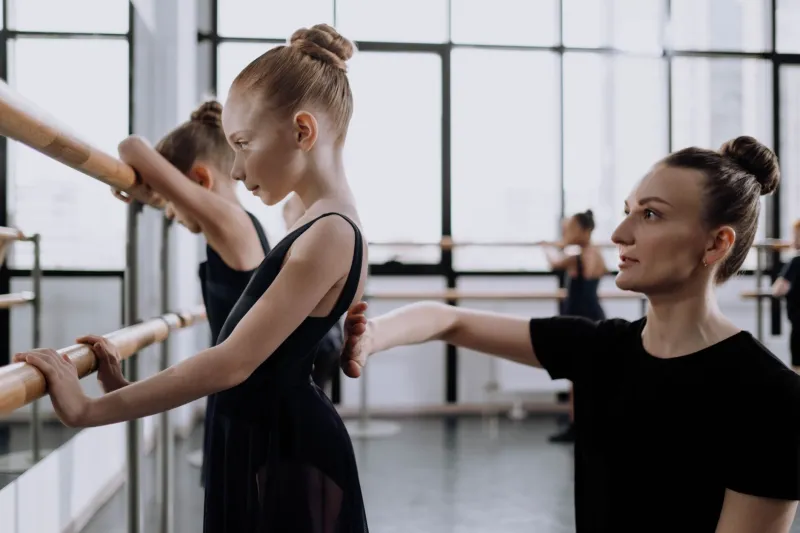
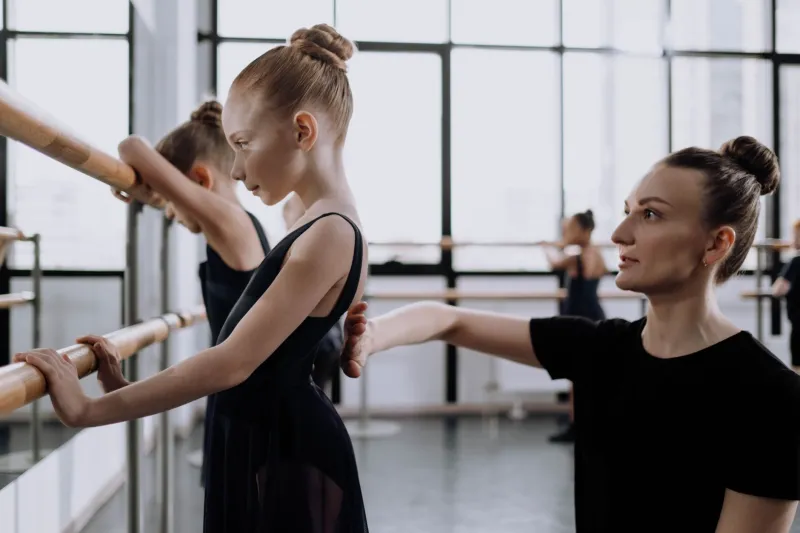
Ask most American dance educators to name the primary influences on their conservatory curriculum and you will hear a predictable list: Cecchetti, Vaganova, Graham, Cunningham, perhaps Forsythe or Release Technique if the institution trends progressive. What you will almost never hear is Bharatanatyam, Kathak, or the guru-shishya parampara — the teacher-student transmission model that has governed Indian classical training for more than two thousand years.
This absence is rarely acknowledged as a gap. It tends not to be acknowledged at all. And yet, at a moment when American dance education is under genuine pressure — grappling with rising injury rates among pre-professional students, declining enrollment in degree programs, and urgent questions about whose bodies and whose movement knowledge count as rigorous — the pedagogical frameworks embedded in Indian classical traditions offer answers that no amount of Pilates cross-training has yet provided.
What the Natyasastra Already Knew
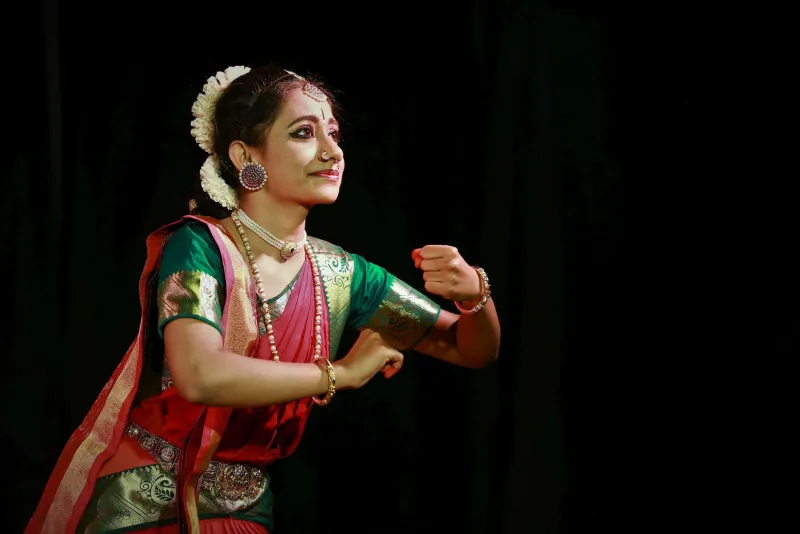
The Natyasastra, the foundational Sanskrit text on performance theory attributed to the sage Bharata Muni and composed roughly between 200 BCE and 200 CE, is not merely a choreographic manual. It is an integrated theory of the performing body that encompasses anatomy, psychology, philosophy, and pedagogy within a single coherent framework. The text's understanding of how the body generates and communicates emotional states — its theory of rasa, or aesthetic flavor — anticipates by two millennia much of what contemporary neuroscience and somatic psychology are only now confirming.
More immediately practical for American educators is the text's underlying assumption about how dance should be taught: not as the acquisition of external shapes, but as the cultivation of an internal state from which movement naturally arises. This is not a mystical claim. It is a pedagogical strategy with demonstrable consequences for how students learn, retain, and embody movement.
Dr. Sandra Ferencz, a dance educator and researcher at a performing arts university in the Pacific Northwest who has spent four years integrating elements of Indian classical pedagogy into her undergraduate curriculum, describes the contrast in concrete terms. "In conventional Western training, we teach students to approximate a shape and then correct it. The correction is external — a mirror, a teacher's adjustment, a video replay. In the guru-shishya model, the correction is internal. The teacher is guiding the student toward an understanding of why the body moves the way it does, not just how it should look. That's a fundamentally different cognitive process, and it produces a fundamentally different dancer."
The Injury Problem and What Tradition Understands About It
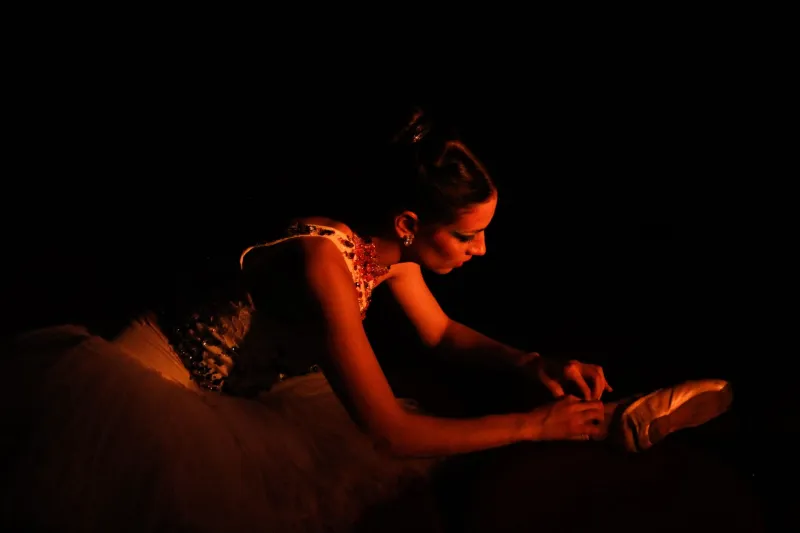
Injury rates among pre-professional dance students in the United States remain a persistent and poorly addressed crisis. Studies published in dance medicine journals consistently show that between sixty and eighty percent of serious dance students sustain significant injuries during their training years, with stress fractures, hip labral tears, and overuse injuries of the spine and lower extremity among the most common. The dominant response has been to add physical therapy, strengthen cross-training requirements, and monitor training loads more carefully.
What has received far less attention is the possibility that the training philosophy itself may be part of the problem.
Indian classical forms train the body from the ground up — literally. Bharatanatyam begins with the feet, building stability and proprioceptive awareness through years of foundational work before introducing complex upper-body vocabulary. The training is cumulative and developmental in a way that Western conservatory training, with its pressure toward rapid technical acquisition, often is not. The aramandi — the half-sitting foundational stance of Bharatanatyam — develops the deep stabilizing musculature of the hip and pelvis that dance medicine specialists now identify as critical to injury prevention, but which many Western curricula never systematically address.
"I had a student who came to me with chronic hip pain after three years at a well-regarded ballet program," says Kavitha Nair, a Bharatanatyam teacher based in Houston who has worked with several professional dance companies on injury rehabilitation. "Within six months of foundational Bharatanatyam training — just the basic posture work, the footwork, the breathing — her pain had resolved. Not because we did physical therapy. Because we rebuilt her relationship with the ground."
Oral Tradition as Cognitive Technology
Beyond anatomy, the pedagogical methods of Indian classical training offer something that Western conservatories have largely abandoned in their embrace of notation, video documentation, and digital learning tools: the cognitive benefits of transmission through oral and embodied tradition.
The guru-shishya model is not simply an apprenticeship. It is a relationship that unfolds over years, in which knowledge is transmitted not as information to be downloaded but as understanding to be grown. Students learn by watching, by repetition, by the gradual accumulation of embodied knowing that cannot be shortcut by a YouTube tutorial or a notation score. Research in cognitive science on motor learning and long-term memory consolidation suggests that this slower, more relational mode of transmission produces deeper, more durable learning than the rapid-acquisition models that dominate contemporary conservatory training.
James Whitfield, chair of dance at a mid-sized liberal arts college in the Midwest who has begun incorporating oral transmission practices into his pedagogy courses, notes that students initially resist the approach. "We've trained them to want the answer immediately — show me the shape, correct me, move on. When you ask them to watch, to wait, to let understanding come through repetition rather than correction, they're uncomfortable. And then something shifts. They start to own the movement in a way they never did before."
The Question of Access
None of this is to suggest that integrating Indian classical pedagogy into American conservatories is straightforward. Questions of cultural ownership, appropriate attribution, and the risk of extracting technique while erasing context are legitimate and must be navigated with care. The guru-shishya relationship carries spiritual and ethical dimensions that cannot simply be adopted as a teaching method without acknowledgment of their origins.
But the alternative — continuing to ignore an extraordinarily sophisticated body of pedagogical knowledge because it originates outside the Western canon — is not a neutral position. It is a choice, and it carries costs that American dance education is already paying.
The curriculum was always there. It was simply never offered.