What the Camera Cannot Hold: The Quiet Violence of Archiving a Living Art
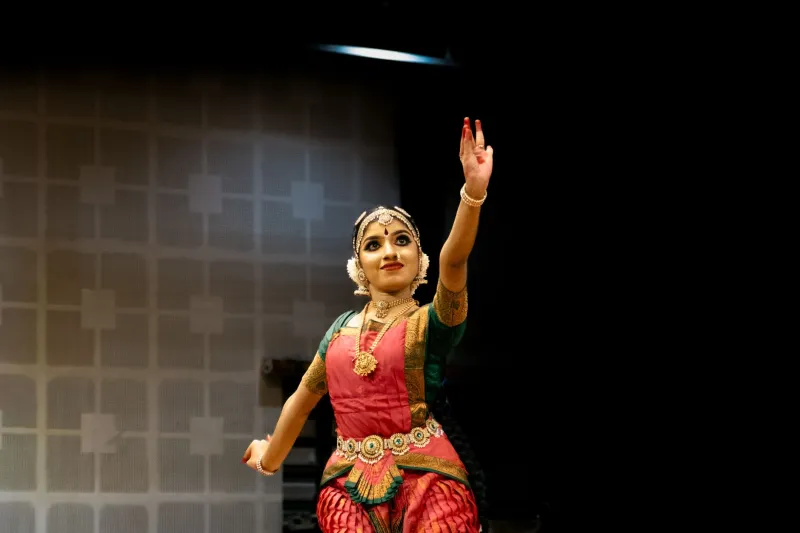
There is a particular kind of irony embedded in the act of filming a Bharatanatyam performance. The camera steadies itself, the red light blinks on, and in the effort to preserve something fragile, it begins—almost imperceptibly—to change it.
This is not a new anxiety. But as American universities, South Asian cultural organizations, and streaming platforms accelerate their efforts to document Indian classical dance traditions, the tension between preservation and transformation has grown impossible to ignore. What does it mean to archive an art form whose deepest knowledge has always lived in the body, passed between a guru and a student through proximity, repetition, and silent correction—and never through a screen?
The Archive as Argument
When scholars speak of preservation, they tend to speak in terms of rescue. The logic is intuitive: document now, or lose forever. And there is no question that irreplaceable material has already vanished. Footage of legendary Odissi master Kelucharan Mohapatra, early recordings of Rukmini Devi Arundale reconstructing Bharatanatyam from near-extinction in the 1930s, archival film of devadasi practitioners whose lineages were severed by colonial and nationalist pressures—these materials carry genuine historical weight. Their existence matters.
But archivists working at the intersection of classical Indian performance and digital preservation are increasingly candid about what the camera cannot capture. "A recording documents an event," says one scholar affiliated with a major South Asian studies program on the East Coast. "It does not document the art. Those are not the same thing."
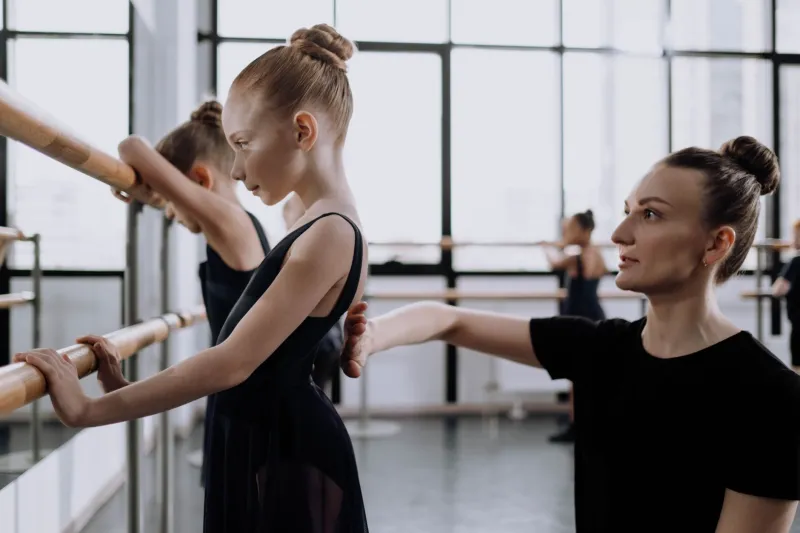
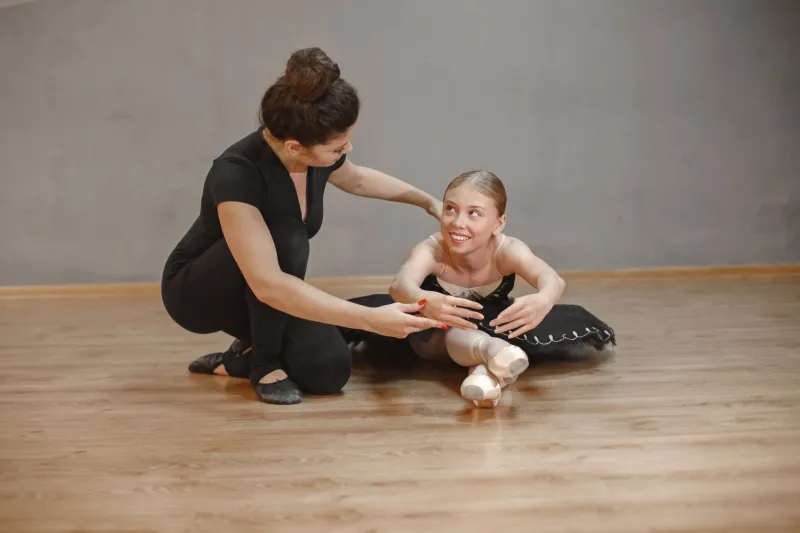
The distinction is more than philosophical. Indian classical dance traditions—Bharatanatyam, Kathak, Manipuri, Kuchipudi, Mohiniyattam, and others—are built around the concept of living transmission. The guru-shishya parampara, the pedagogical relationship between teacher and student, is not merely a method of instruction. It is the form itself. What is transmitted is not a sequence of steps that can be replicated from a recording; it is a quality of understanding that emerges through years of embodied dialogue. The angle of a wrist, the weight behind a footfall, the micro-adjustments a teacher makes by physically repositioning a student's shoulder—none of this survives the lens.
When Documentation Becomes Prescription
The problem deepens when recordings begin to function not as historical documents but as authoritative texts. This is already happening. Students in American cities with limited access to qualified gurus are learning foundational sequences from YouTube videos. Dancers preparing for arangetrams—the formal debut performances that mark a student's readiness to perform publicly—are supplementing their training with footage of celebrated artists. Adjudicators at competitions have been known to reference recordings as benchmarks of correct form.
This shift carries significant consequences. Indian classical dance has never been a fixed system. Every legitimate lineage carries its own variations, its own emphases, its own interpretive logic. A Kalakshetra-trained Bharatanatyam dancer and a dancer from the Pandanallur tradition may execute the same adavu—the foundational rhythmic unit—with meaningfully different aesthetics, and both will be correct within their respective systems. When a recording of one tradition becomes a de facto standard, other valid lineages are quietly marginalized.
"The camera picks one version and freezes it," observes a Kathak performer and educator based in the Chicago area who has spent years developing curriculum for American students. "But the tradition was never one version. It was always a conversation across generations. When you freeze it, you end the conversation."
The Particular Problem of Rasa
There is another dimension to this problem that touches the very heart of what Indian classical performance is meant to do. The concept of rasa—the aesthetic emotional experience that a skilled performance generates in a receptive audience—is fundamentally relational. It arises in the space between performer and witness, shaped by the quality of attention both bring to the encounter. It is, by definition, unrepeatable.
A recording can document the technical execution of abhinaya, the expressive dimension of classical dance. It can capture the movement of the eyes, the articulation of the hands, the rhythm of the feet against the floor. What it cannot capture is the energetic presence of a performer in a room, the way a dancer's breath before a critical phrase can shift the emotional atmosphere of an entire hall, or the accumulated anticipation that builds across a full-length performance when an audience has been genuinely transported.
When a student watches a recording and attempts to reproduce what they see, they are, in a meaningful sense, reproducing the shadow rather than the object. This is not a failure of technology; it is a fundamental category error. The recording is not the performance. It is evidence that a performance occurred.
Preservation Without Petrification
None of this is an argument against documentation. The archival impulse is not wrong—it is incomplete. The question facing institutions and practitioners alike is how to document in ways that acknowledge what cannot be captured, rather than implying that what is captured is sufficient.
Some organizations are experimenting with more layered approaches. Rather than filming performances alone, they are recording extended pedagogical sessions—guru-student exchanges, corrections, the iterative process of learning a composition over months. They are pairing visual documentation with extensive oral history interviews, gathering the contextual knowledge that gives technical material its meaning. A few programs are building annotation systems that allow master practitioners to comment directly on archival footage, flagging what the camera missed and why it matters.
These are promising directions. But they require resources, institutional commitment, and—most critically—the ongoing participation of living practitioners who are themselves aging. The window for capturing the knowledge that surrounds the documentation is narrowing.
A Form That Resists Fixity by Design
Perhaps the most important insight to carry into any conversation about archiving Indian classical dance is this: the form was never designed to be fixed. The Natyasastra itself, the ancient Sanskrit treatise that underlies so much of Indian performance theory, is not a rulebook. It is a framework for improvisation within structure, a set of principles from which infinite specific expressions can arise. The tradition has always evolved—absorbing regional influences, responding to historical pressures, changing in the hands of each generation of practitioners.
Preservation, in the deepest sense, may mean ensuring that this capacity for living evolution continues—that there are trained practitioners, functioning lineages, and engaged audiences to carry the form forward. An archive full of footage of a tradition that has no living inheritors is not preservation. It is a very sophisticated obituary.
The camera can hold a great deal. What it cannot hold is the art's insistence on remaining alive.