When Two Bodies Cannot Coexist: The Hidden Cost of Ballet Training for Indian Classical Dancers
In dance studios from New Jersey to Los Angeles, a particular kind of confusion is unfolding. Young dancers of Indian heritage — many of them daughters and granddaughters of immigrants who enrolled them in Bharatanatyam classes to preserve cultural continuity — are simultaneously attending ballet academies where the pedagogical assumptions run in almost precisely the opposite direction. The result, according to a growing number of dance medicine specialists and classical Indian dance educators, is a body caught between two incompatible grammars, each one insisting on a different truth.
The problem is not merely aesthetic. It is biomechanical, neurological, and, for many dancers, deeply psychological.
Two Spines, One Body
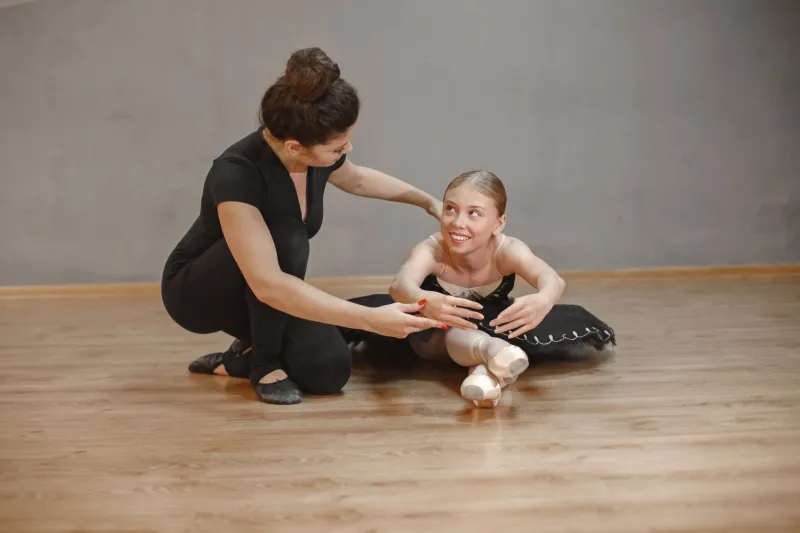
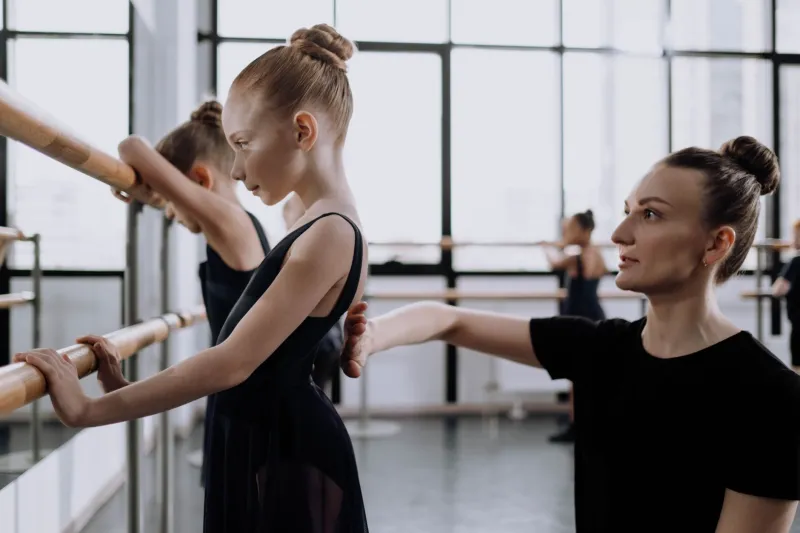
At the center of the conflict is the spine. Western ballet training treats the upright, elongated, vertically neutral spine as the foundational condition for all movement. The pelvis is tucked, the lumbar curve minimized, the torso lifted away from the hips in a sustained vertical aspiration. This postural ideal is not arbitrary — it is engineered to produce the specific visual qualities that ballet prizes: lightness, elevation, the illusion of weightlessness.
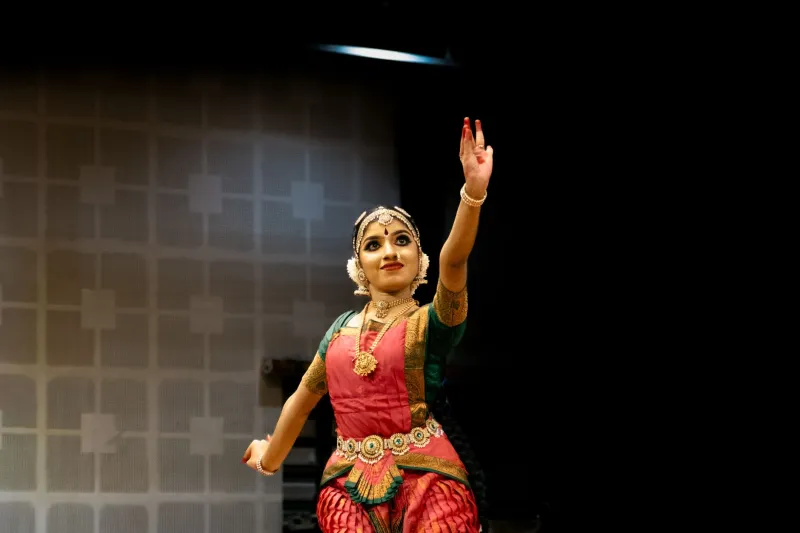
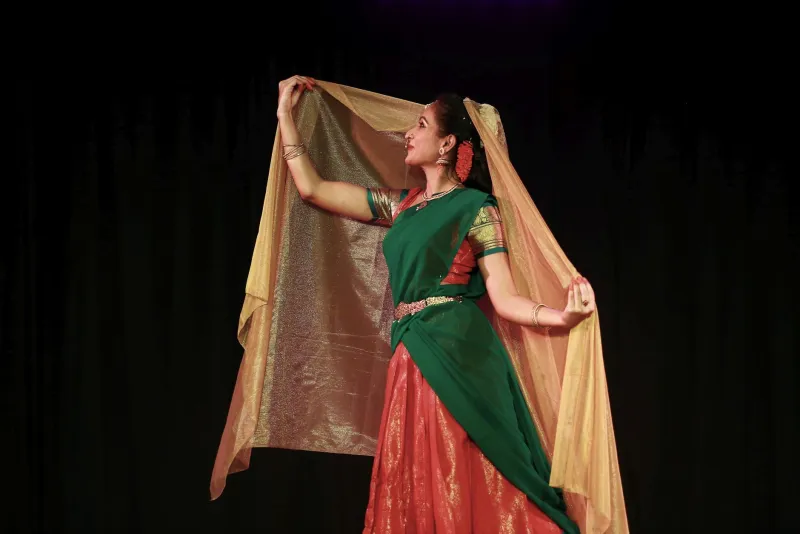
Bharatanatyam, and to varying degrees other Indian classical forms including Kuchipudi, Odissi, and Mohiniyattam, operate from a fundamentally different postural premise. The aramandi — the characteristic half-seated, knees-bent, turned-out stance that serves as the home position in Bharatanatyam — requires the pelvis to tilt forward, the lumbar spine to curve, and the weight of the body to descend deliberately into the earth. This is not a preparation for movement; it is itself a state of readiness, one that declares an entirely different relationship between the body and gravity.
Where ballet reaches upward, classical Indian dance presses downward. Where ballet elongates the lumbar spine, Bharatanatyam curves it. These are not stylistic variations on a shared anatomical theme. They are opposing philosophies of how a human body should occupy space.
The Injury Pattern Nobody Is Talking About
Physical therapists who work with performing artists are beginning to document an injury pattern that correlates specifically with dual training in these two traditions. The lower back is the most frequently implicated site. Dancers who have internalized ballet's posterior pelvic tilt and then attempt to sustain the anterior tilt required by aramandi are placing contradictory demands on the lumbar musculature — demands that, over months and years of training, produce chronic strain, hypermobility in some segments and compensatory rigidity in others, and a generalized instability that neither tradition's training was designed to address.
The hip rotators present a parallel problem. Ballet's turnout is achieved through external rotation sustained from the hip joint, with the knee tracking over the toe. The turned-out position in Bharatanatyam, while superficially similar, is generated differently — with the knees bent, the weight distributed across the full foot, and the rotational demand distributed across the entire lower limb in a way that fundamentally differs from ballet's geometry. Dancers who have been trained to produce turnout through one mechanism and then attempt to produce it through another are frequently using the wrong muscles, loading the wrong joints, and building a movement vocabulary that is neither one thing nor the other.
Knee injuries, particularly those involving the medial structures, appear with troubling frequency among dancers navigating this dual training. So do stress-related presentations in the ankles and feet — unsurprising, given that ballet's relationship to the foot culminates in pointe work, a practice that concentrates the body's entire weight onto the distal phalanges, while Indian classical traditions cultivate a fully grounded, heel-inclusive footwork in which stamping is not an error but an art form.
The Aesthetic Contamination Problem
Beyond injury, educators in both traditions speak with frustration about what might be called aesthetic contamination — the way that years of ballet training can make it genuinely difficult for a dancer to embody the visual qualities that Indian classical forms require.
The problem is not simply muscular. It is perceptual. Dancers who have spent formative years being corrected toward a straight spine, a tucked pelvis, and a lifted sternum develop a felt sense of rightness around those positions. The aramandi, with its deliberate earthward weight and forward pelvic tilt, registers in the nervous system not as a neutral alternative but as a mistake — something to be corrected, something that feels wrong precisely because it violates the postural norms that have been so thoroughly internalized.
Several Bharatanatyam teachers in the United States have described the experience of working with students who have extensive ballet backgrounds and who must, in effect, unlearn the sensation of correctness before they can begin to learn a new one. This is a longer and more effortful process than it might appear. The body's sense of its own uprightness is not a conscious belief that can be revised by instruction; it is a somatic habit, laid down through thousands of hours of practice, that resists revision at every level.
Navigating the Contradiction
Not every dancer or educator advocates for complete separation of the two training streams. Some argue that cross-training, approached with sufficient anatomical literacy and pedagogical care, can be managed without the worst consequences. The key, according to this perspective, is explicit instruction about the differences — not simply drilling students in the physical requirements of each tradition, but teaching them to understand why those requirements exist, what they are designed to produce, and how to consciously shift between physical modes rather than allowing one to contaminate the other.
This approach demands a level of body awareness and theoretical sophistication that is not typically introduced in early dance training. It also requires educators in both traditions to possess knowledge of the other — a rare condition in studios where ballet teachers may have no exposure to Indian classical forms, and vice versa.
Some dancers who have navigated both traditions successfully describe a process that sounds less like integration than like compartmentalization: the capacity to enter one physical grammar fully and then exit it fully before entering the other. This is a demanding cognitive and somatic skill, and it is one that appears to take years to develop, if it develops at all.
What the Body Remembers
The deeper issue, perhaps, is one of timing. The years during which most dancers receive their foundational training — roughly ages six through sixteen — are precisely the years during which movement habits are most deeply encoded. When two competing sets of habits are being encoded simultaneously during this critical window, the result is not synthesis but interference.
The Indian classical traditions carry within them a sophisticated understanding of how the body learns. The guru-shishya model, with its emphasis on sustained, repetitive immersion in a single physical vocabulary under close mentorship, reflects an implicit recognition that the body's education is not a matter of information transfer but of somatic transformation — a process that requires time, consistency, and the absence of contradictory instruction.
This is not an argument against breadth of training. It is an argument for understanding what the body can and cannot do simultaneously, and for taking seriously the possibility that some combinations of training, however well-intentioned, may exact a cost that neither the dancer nor her teachers fully anticipates.
For the young dancers currently inhabiting both of these traditions at once, that cost is often invisible until it is not. And by then, the body has already made its choices.