What Happens in the Brain When a Hand Becomes a Language: The Unexpected Neuroscience of Mudra
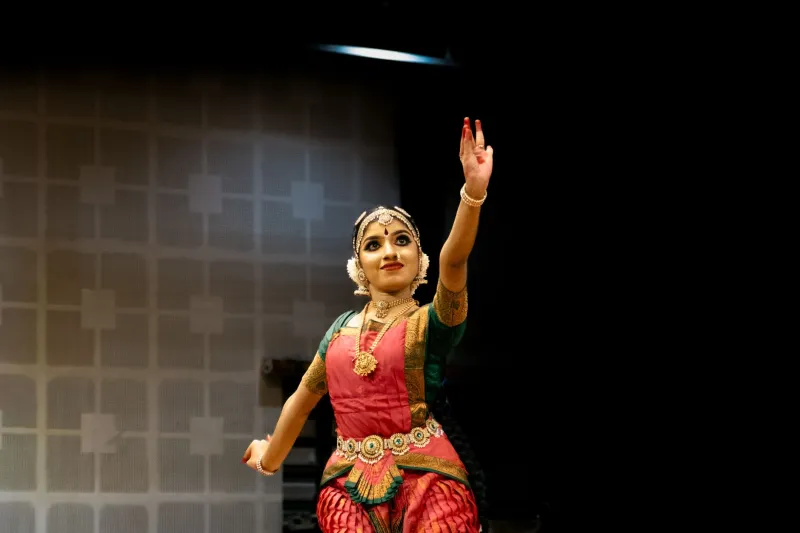
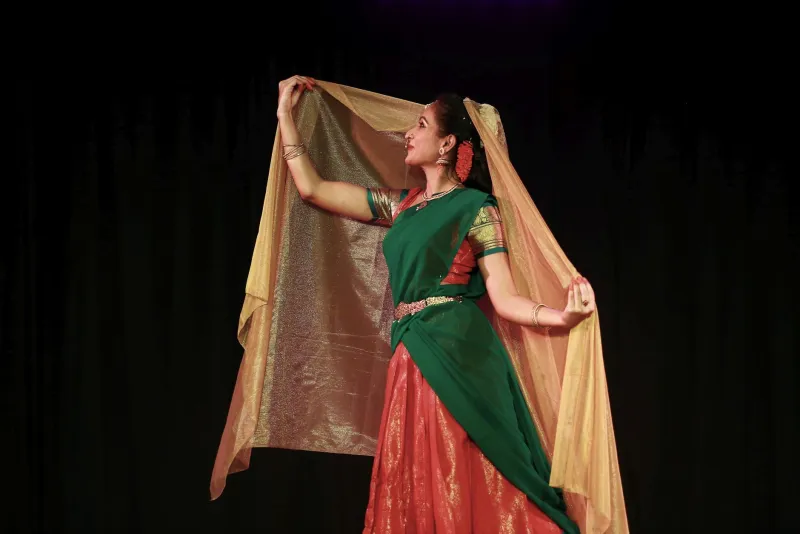
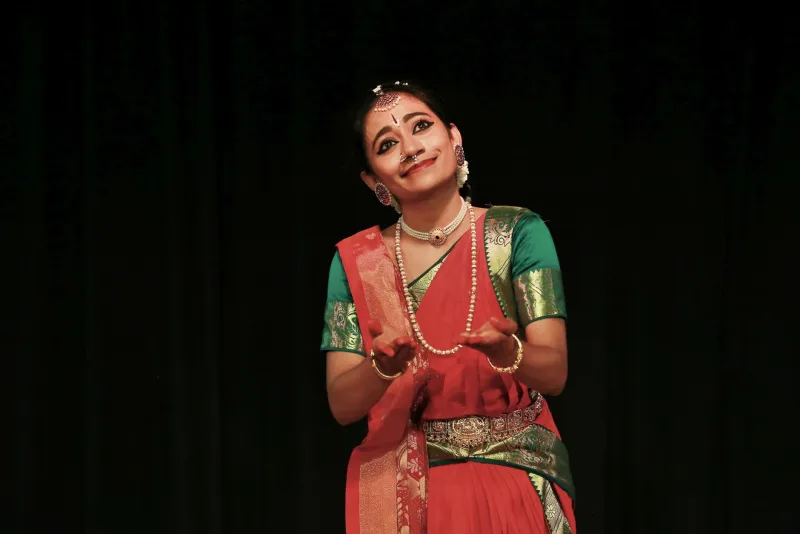
For centuries, practitioners of Bharatanatyam, Kathak, Odissi, and other Indian classical forms have maintained something that Western science was ill-equipped to evaluate: that a precisely configured hand gesture carries meaning beyond the merely visual. The mudra, in classical Indian aesthetic theory, is not decoration. It is transmission. It is a unit of embodied grammar, capable of evoking specific emotional states, invoking divine presences, and communicating narrative information with extraordinary efficiency. The Natyashastra itself catalogs dozens of single-hand gestures—asamyuta hastas—and an equal number of combined forms, each assigned precise meanings and theatrical applications.
Until recently, this claim sat comfortably in the domain of tradition and philosophy, largely unexamined by biomedicine. That is beginning to change.
What the Scanners Are Showing
A cluster of studies emerging from cognitive neuroscience and gesture studies research over the past decade has begun to illuminate what actually occurs in the nervous system when mudras are performed and observed. The findings are, by the subdued standards of academic literature, remarkable.
Researchers using functional magnetic resonance imaging have documented that observation of mudras activates regions associated not only with visual processing but with the mirror neuron system—the network of neural structures implicated in the simulation of observed actions. This, in itself, is not entirely surprising; the mirror neuron system responds to intentional human movement broadly. What has drawn sharper attention is the degree to which emotionally coded gestures—those mudras associated with specific rasas, or aesthetic emotional states—appear to engage limbic structures involved in affective processing, even in viewers who possess no formal training in Indian classical performance.
In plainer terms: the brain of a viewer who has never attended a Bharatanatyam performance and cannot identify a single hasta appears to register something emotionally significant when presented with certain mudras. The precise contour of the gesture, the intentionality of its execution, and its rhythmic placement within a performance sequence all appear to modulate this response.
The Problem of Meaning Without Context
This is where the science becomes genuinely provocative. Conventional semiotics would suggest that a symbol requires shared cultural code to convey meaning. A viewer unfamiliar with the hasta pataka—the flat, extended-finger gesture used to represent a range of concepts from a river to a negation to a forest canopy—should, by this logic, receive no intelligible signal. The gesture should read as movement, nothing more.
Yet the neuroimaging data complicates that assumption. Studies drawing on populations with no prior exposure to Indian classical arts have found that specific mudras, particularly those tied to what the Natyashastra classifies as the sthayibhavas—the eight primary emotional states—produce measurable differentiation in viewer brain activity. Gestures associated with karuna (compassion or sorrow) and those associated with sringara (love or beauty) activate different neural signatures, even when viewers cannot consciously name or categorize what they are seeing.
Some researchers have proposed that this reflects a deeper layer of gestural communication that predates cultural specificity—what might be understood as a substrate of embodied meaning that operates below the threshold of learned symbolic systems. Others are more cautious, noting that experimental design in this area remains contested and that the separation of purely visual aesthetic response from culturally conditioned interpretation is methodologically difficult.
The debate is productive. And it is drawing scholars from fields that rarely speak to one another: classical dance pedagogy, cognitive science, phenomenology, and South Asian studies.
What Performers Have Always Known
For those who have spent years inside the guru-shishya tradition, the neuroscientific conversation carries a particular resonance. Senior practitioners of Indian classical forms have long described the experience of performing mudras in terms that map, however imperfectly, onto what the research is beginning to document.
The physical act of forming a hasta is not, in classical training, a matter of approximation. Students spend months—sometimes years—refining the precise angle of each finger joint, the tension or softness of the palm, the relationship between the hand's configuration and the orientation of the wrist and forearm. This precision, teachers have consistently maintained, is not aesthetic preference. It is functional. The exact form of the gesture is understood to condition the practitioner's own internal state, not merely to communicate to an audience.
This claim finds an unexpected ally in research on proprioception and interoception—the body's systems for sensing its own position and internal condition. Evidence is accumulating that specific hand configurations influence autonomic nervous system activity in the performer. Certain gestures appear to modulate breathing patterns and heart rate variability in ways consistent with the emotional states they are traditionally understood to represent. The gesture, in this reading, does not merely illustrate an emotional state. It may, in some measurable sense, help produce one.
The Limits of the Laboratory
It would be a mistake to overstate what the current science has established, and responsible engagement with this research requires acknowledging its boundaries. Neuroimaging studies in this domain tend to involve small sample sizes. The cultural and attentional variables affecting viewer response to unfamiliar performance traditions are extraordinarily difficult to control. And the philosophical distance between what a functional MRI can measure and what classical Indian aesthetic theory describes as the transmission of rasa remains vast.
The Natyashastra is not a neuroscience text. Its account of how gesture generates aesthetic experience operates within a metaphysical framework—one involving the relationship between performer, viewer, and a shared field of aesthetic consciousness—that contemporary biomedicine has no instruments to evaluate. The risk of using neuroscientific findings to simply validate traditional claims is that it can flatten the sophistication of the tradition itself, reducing a complex philosophical system to a set of brain activation patterns.
Scholars working at this intersection are largely aware of this hazard. The more careful voices in the field describe the neuroscientific findings not as proof of classical theory but as a point of productive convergence—a place where two very different knowledge systems are, for the first time, generating questions they can ask of one another.
Why This Matters for American Audiences
For American viewers encountering Indian classical performance—often for the first time at a university arts center, a cultural festival, or through digital platforms—this research offers something genuinely useful: a framework for understanding why the experience of watching a skilled classical dancer can feel communicative even when the specific symbolic content of the gestures is entirely unknown.
The mudra is not a puzzle to be decoded before it can be felt. The body, both the performer's and the viewer's, appears to be doing interpretive work that runs parallel to and sometimes ahead of conscious understanding. That is a finding with implications far beyond the concert stage. It touches on how human beings transmit knowledge across cultural distance, how embodied practice encodes information that verbal or textual systems cannot, and how the ancient traditions preserved within Indian classical performance may carry within them discoveries that Western science is only beginning to formulate the questions to investigate.
The hand, it turns out, has been speaking a language the brain already knows how to hear. We are only now learning how to listen.