Screens That Shrink the Stage but Not the Soul: Why Indian Classical Training Thrives in the Digital Frame
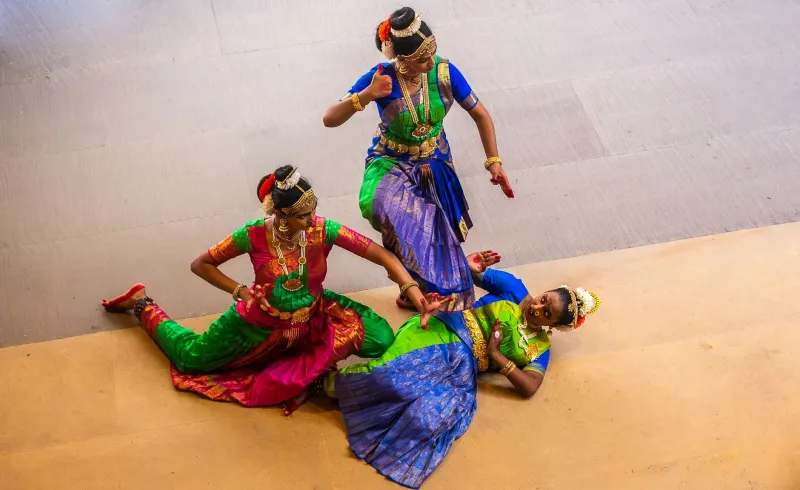
When concert halls went dark in 2020 and performers pivoted to laptop cameras and streaming platforms, the digital stage revealed something no choreographer had anticipated. Certain dance forms did not merely survive the compression of the screen — they arrived on it with a kind of authority that surprised audiences and unsettled assumptions about what live performance actually requires.
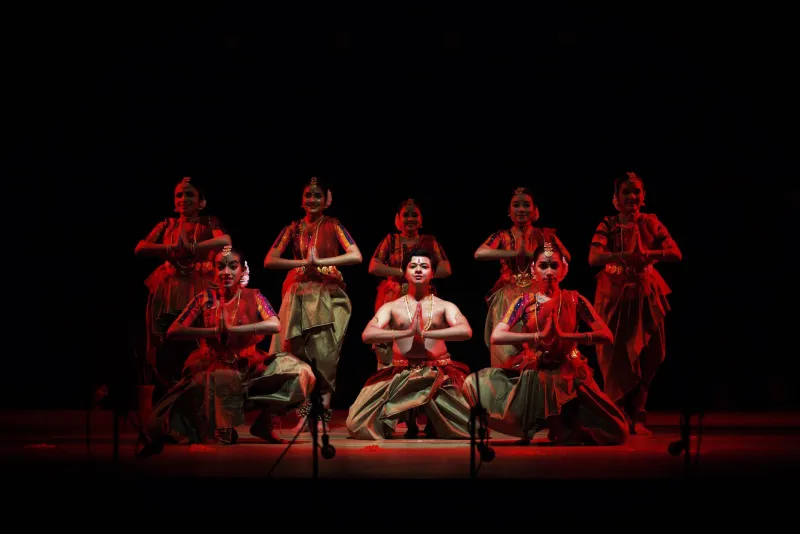
Indian classical dancers, trained in forms such as Bharatanatyam, Odissi, and Kathak, were among those who adapted with the least visible loss. Meanwhile, many practitioners of ballet and Western contemporary dance reported feeling flattened, emptied, and oddly invisible despite performing in the same domestic living rooms. The question of why this divergence occurred opens a revealing window into the foundational philosophies that separate these traditions.
The Architecture of Inward Energy
At the core of most Indian classical training is a concept that has no clean English translation but might be approximated as contained radiance — the idea that a performer's energy is not thrown outward toward an audience but cultivated inward and allowed to emanate. The Sanskrit performance treatise Natyasastra, from which this publication draws its name, describes the body not as a vessel projecting into space but as a universe generating its own gravitational field.
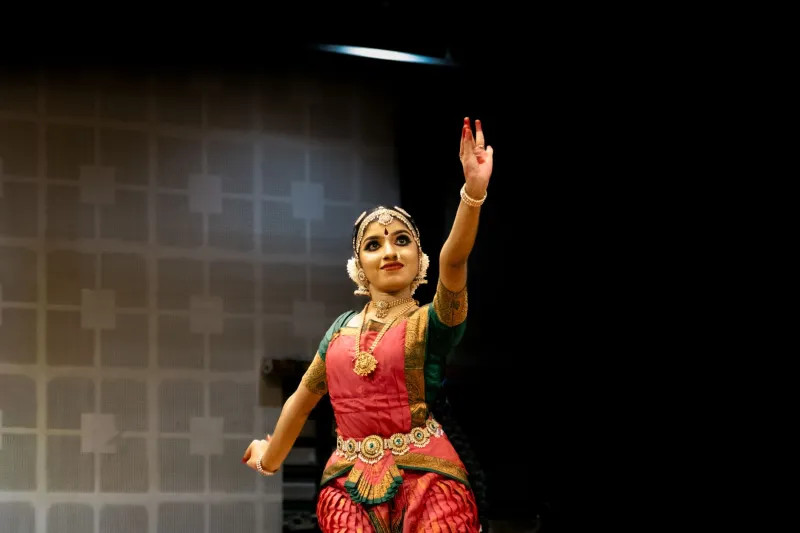
This distinction is not merely poetic. In practical training terms, it means that a Bharatanatyam dancer spends years learning to fill the space between gestures — to make the stillness between a mudra sequence as meaningful as the movement itself. The face, the eyes, the quality of breath: all are trained with the same rigor as the footwork. When a camera reduces a performer to a rectangle of pixels, this internalized density does not disappear. It concentrates.
"The camera doesn't lie, and it doesn't flatter," says Priya Venkataraman, a Bharatanatyam performer based in the San Francisco Bay Area who began offering online performances well before the pandemic. "What it does is remove the architecture of the theater — the distance, the lighting, the shared air. And what you're left with is exactly what the training prepared you for: the face, the hands, the eyes. The abhinaya. That's where we live anyway."
When Space Is the Instrument
Western dance forms, particularly classical ballet and its contemporary descendants, were built around a fundamentally different relationship with space. The proscenium theater is not merely a venue for ballet — it is, in a meaningful sense, its instrument. The elongated lines of a dancer's arabesque are calibrated for a specific viewing distance. The corps de ballet's geometric precision is a visual argument made across fifty feet of air. The leap that takes a dancer briefly into flight derives its meaning from the space it traverses.
Transplant that aesthetic logic to a sixteen-by-nine screen, and the spatial argument collapses. The leap becomes a brief disappearance from frame. The line that reads as sublime at thirty feet reads as stiffness at arm's length. The outward projection that fills a thousand-seat hall becomes, on a laptop, something uncomfortably close to aggression.
Rachel Bogard, a choreographer and dance technologist based in New York who has collaborated with both Western contemporary and Indian classical companies on digital performance projects, describes the challenge in structural terms. "Western concert dance is fundamentally a spatial art — it's about bodies negotiating with architecture. When you remove that architecture, you're not just changing the venue. You're amputating a limb. Indian classical forms have always been more intimate in their original context — the temple, the court, the small gathering. The screen is actually closer to those origins than the proscenium stage ever was."
Mudra and the Close-Up
The hand gesture vocabulary of Indian classical dance — the mudras described in exhaustive taxonomic detail in the Natyasastra — constitutes one of the most sophisticated sign systems in any performing art. Each gesture carries layers of narrative, emotional, and symbolic content. In a large theater, much of this detail is simply invisible. A viewer in the back row of Carnegie Hall cannot read the difference between a pataka and a tripataka with any precision.
On a screen, these distinctions become suddenly, almost startlingly legible. The camera does what the distant audience never could: it reads the hand. Performers who have spent years developing micro-precise mudra execution find themselves in the rare position of being seen completely, perhaps for the first time.
"I've been performing for twenty-two years," says Meenakshi Rao, an Odissi dancer who teaches at a performing arts school in Chicago. "And I had students tell me after watching my first livestream that they finally understood what I was doing with my fingers. They'd been in the same room with me for years. The screen made me visible in a way the stage never had."
Hybrid Futures and What They Demand
Performance technologists working at institutions such as the Kennedy Center and universities across the country have begun paying closer attention to this asymmetry as hybrid performance — combining live and streamed audiences simultaneously — becomes a permanent feature of the performing arts landscape rather than a pandemic accommodation.
The implications for training are significant. If the screen rewards internal focus, facial expressivity, gestural precision, and a body that generates its own spatial authority rather than borrowing it from the room, then those are the capacities that dance education needs to develop more deliberately. Indian classical pedagogy has been building them for centuries.
This does not suggest that Western dance forms are diminished or that their spatial ambitions are misguided. It suggests, rather, that the digital performance environment has exposed a gap in Western training philosophy that Indian classical traditions have long since filled — and that cross-traditional dialogue, already underway in studios and conservatories across the country, may be one of the most productive conversations happening in American dance right now.
The screen did not create this difference. It merely made it impossible to ignore.