Who Owns the Dance? Indian Classical Choreography and the Limits of Copyright
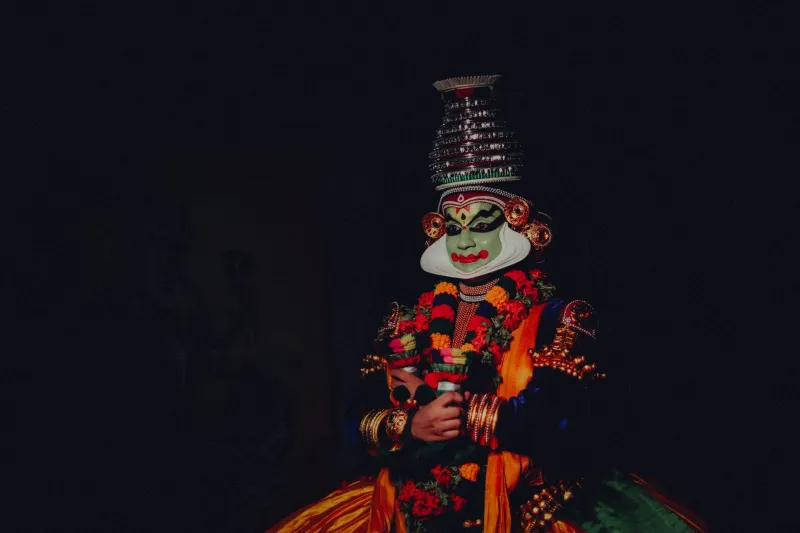
For centuries, the transmission of Indian classical dance operated through an elegant, if unspoken, contract. A student received the full inheritance of a tradition—its compositions, its gestural vocabulary, its interpretive nuances—from a guru who had received the same from their own teacher. The lineage was the authority. The form itself was understood to belong to no single person but to a living continuum of practice stretching back, in some cases, more than a thousand years.
That model is now colliding, sometimes violently, with a legal system built on entirely different assumptions.
As Indian classical dance has expanded across the United States—through university programs, performing arts centers, diaspora institutions, and, increasingly, digital platforms—choreographers and their legal representatives are being forced to confront a question the tradition never anticipated: who, precisely, owns a dance?
A Framework Built for a Different World
American copyright law, as codified in the Copyright Act of 1976 and its subsequent amendments, does extend protection to choreographic works. Since 1978, original choreography fixed in a tangible medium—whether through notation, video recording, or other documentation—qualifies for federal copyright protection. On the surface, this seems straightforward. In practice, applied to Indian classical dance, it generates complications that neither lawyers nor dancers are fully equipped to resolve.
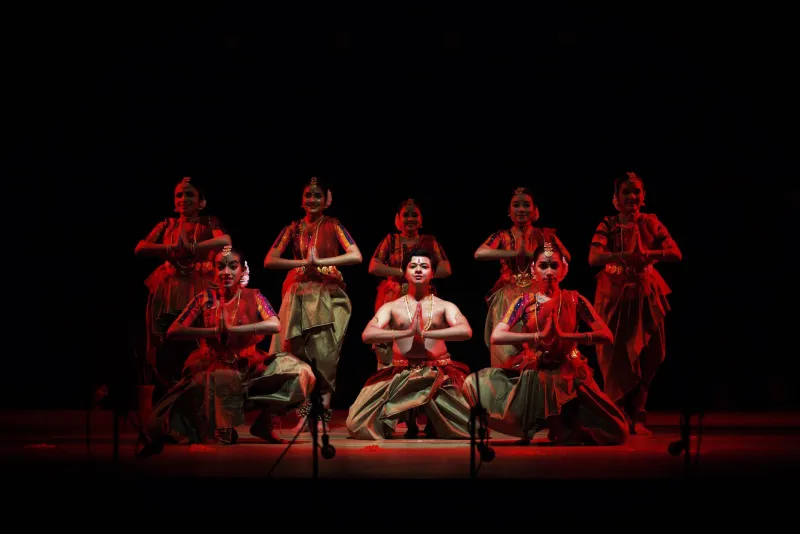
The difficulty begins with the concept of originality. Copyright requires that a work be the product of independent creative effort by an identifiable author. Indian classical dance, by contrast, is built on a framework of received forms. A Bharatanatyam varnam, for instance, may have been composed centuries ago, revised by a devadasi lineage, reworked by a twentieth-century revival-era choreographer, and further adapted by a contemporary dancer trained in Chicago or Houston. At which point in that chain does protectable authorship begin? And who, precisely, is the author?
Legal scholars who specialize in intellectual property have noted that traditional cultural expressions—a category that encompasses much of classical Indian dance repertoire—occupy an awkward position in American law. They are frequently too old to qualify for active copyright protection, yet they are not so ancient or generic as to be entirely free of creative ownership claims. The result is a legal gray zone that practitioners navigate with varying degrees of awareness and anxiety.
The Digital Acceleration
The urgency of these questions has intensified dramatically in the age of streaming video and social media. A choreographer who spent years developing a distinctive interpretation of a Kuchipudi tillana may discover, with minimal recourse, that a version closely resembling her work has appeared on a popular platform performed by a dancer she has never met. A guru whose teaching recordings were shared privately among students may find those materials redistributed without credit or compensation.
Several prominent Indian classical dance organizations based in the United States have begun developing internal policies to address these scenarios. Some have moved to register specific choreographic works with the U.S. Copyright Office, a process that requires precisely the kind of fixed documentation—detailed video records, written notation—that the tradition historically resisted. Others have explored creative licensing frameworks borrowed from the open-source software world, attempting to articulate conditions under which a composition may be performed, adapted, or taught by others.
These efforts, however well-intentioned, surface deeper tensions. The act of registering a traditional composition as an original work can feel, to many practitioners, like an act of enclosure—a privatization of something that was always meant to circulate freely within a community of practice.
The Guru's Invisible Contribution
One of the most underexamined dimensions of this debate concerns the guru's role. In the guru-shishya tradition, a teacher's contribution to a student's development is immense, sustained, and largely uncompensated in any formal economic sense. The transmission includes not only specific compositions but interpretive frameworks, aesthetic sensibilities, and corrective refinements that accumulate over years of close study. When a student later presents that material publicly—sometimes to considerable acclaim and financial reward—the guru's foundational contribution typically goes unacknowledged in any legal or commercial sense.
This is not a new grievance, but the commercial scale of contemporary performance and digital content creation has made it newly visible. A dancer with a substantial online following who monetizes instructional content derived almost entirely from a guru's teaching occupies ethically ambiguous territory that existing copyright frameworks are poorly equipped to adjudicate.
Some institutions have begun experimenting with formal attribution agreements that, while not legally binding in the copyright sense, create a documented record of pedagogical lineage. Others have looked to indigenous intellectual property frameworks developed in contexts such as Native American cultural expression, which attempt to recognize communal and lineage-based forms of creative ownership that individual authorship models cannot accommodate.
Innovation Within Tradition
The conversation grows more complicated still when it involves genuinely contemporary choreographic innovation. Many of the most compelling Indian classical dance artists working in the United States today are doing something more than preserving received forms—they are creating new works that draw on classical vocabularies to address contemporary subject matter, engage with other movement traditions, or explore personal and political themes that have no precedent in the canon.
These artists have a legitimate interest in protecting their creative labor. A choreographer who has spent two years developing an original full-length work in Odissi that explores, say, the experience of South Asian immigration to the American Midwest has created something that is both genuinely new and deeply indebted to a received tradition. Her claim to authorship over the specific arrangement, the structural choices, the interpretive framework she has developed is not unreasonable. But the legal instruments available to her were not designed with her situation in mind.
Copyright, as currently constituted, is a blunt instrument applied to a situation requiring considerable precision. It can protect the specific fixed expression of a work while leaving unprotected the underlying style, technique, and aesthetic grammar—which is precisely where much of the creative investment in Indian classical dance resides.
Toward New Frameworks
What practitioners, scholars, and legal advocates working at this intersection tend to agree on is that the existing framework is insufficient—and that any adequate response will need to be developed collaboratively, with meaningful input from the dance communities most directly affected.
Some of the most productive conversations happening now involve not lawyers but the dancers, gurus, and institutional leaders themselves: articulating what they actually want to protect, what they want to remain freely transmissible, and what kinds of credit and compensation they believe are owed within their communities. These conversations are not always comfortable. They surface long-standing tensions around caste, gender, and economic inequality within Indian classical dance traditions that the language of copyright both obscures and occasionally illuminates.
The deeper question—one that copyright law was never designed to answer—is what it means for a living tradition to remain alive. Indian classical dance has survived, and in many cases flourished, precisely because it was designed to be transmitted, adapted, and reinterpreted across generations. Any legal or institutional framework that forecloses that generative movement risks protecting the form while extinguishing the spirit that animates it.
That is a dilemma no court is positioned to resolve. It is, ultimately, a question the tradition must answer for itself.